
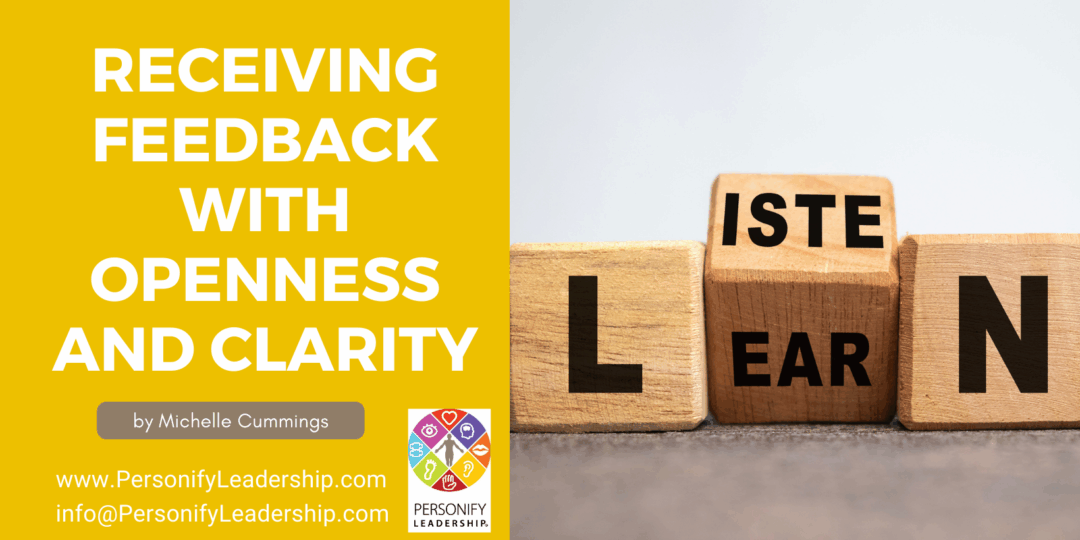
Receiving Feedback with Openness and Clarity
Leadership is often measured by how well someone gives feedback. Yet equally important, and sometimes overlooked, is how leaders receive feedback. The way a leader listens and responds to input sets the tone for the entire organization. When leaders approach feedback defensively, they discourage honesty. But when they are open, curious, and composed, they model the very culture of growth they hope to cultivate.
Receiving feedback well begins with mindset. Neuroscience shows that our brains are wired to perceive criticism as a threat, which can trigger defensiveness or withdrawal. The key is not to silence these natural reactions but to manage them. Leaders who enter feedback conversations with the intention to learn, rather than to protect their ego, create the space for genuine dialogue and stronger relationships.
Research consistently demonstrates that leaders who handle feedback constructively are viewed as more trustworthy and approachable. Their teams are more willing to share ideas, raise concerns, and admit mistakes, behaviors that directly fuel innovation and problem-solving. In contrast, leaders who react poorly to feedback unintentionally create environments of fear and silence, limiting their organization’s potential.
One practical step is to pause before responding. Simple techniques, such as taking a breath, asking clarifying questions, or even thanking the giver before speaking, help leaders regulate emotions and signal openness. These micro-behaviors communicate that feedback is not only tolerated but valued. Over time, they strengthen psychological safety, a proven driver of high-performing teams.
Another important element is reframing feedback as a gift rather than a threat. By consciously shifting the lens from “criticism of me” to “information for my growth,” leaders can stay grounded in the bigger picture. This mindset helps transform difficult feedback into actionable insights that drive continuous improvement.
Timing also matters. Leaders who recognize when they are not in the right emotional state to receive feedback can request a pause and return to the conversation later. Far from being a weakness, this self-awareness ensures the conversation is productive rather than reactive. Modeling this intentionality shows teams that emotional management is part of effective leadership.
The ROI of receiving feedback well is significant. Leaders who adopt this practice see measurable improvements in employee engagement, retention, and overall team performance. Constructive feedback loops reduce costly mistakes, accelerate learning, and drive innovation, all outcomes that directly impact the bottom line.
For leaders ready to sharpen this essential skill, our Deep Dive program offers experiential learning and tools designed to help leaders not only give feedback effectively but also receive it with grace and impact. The ears of a leader matter just as much as the voice.
~Michelle Cummings
Founder & CEO, Personify Leadership
0 431

The Cost of Stress-Driven Absenteeism & The ROI of Emotional AgilitySeeing Leadership from Every Angle




Recent Comments