
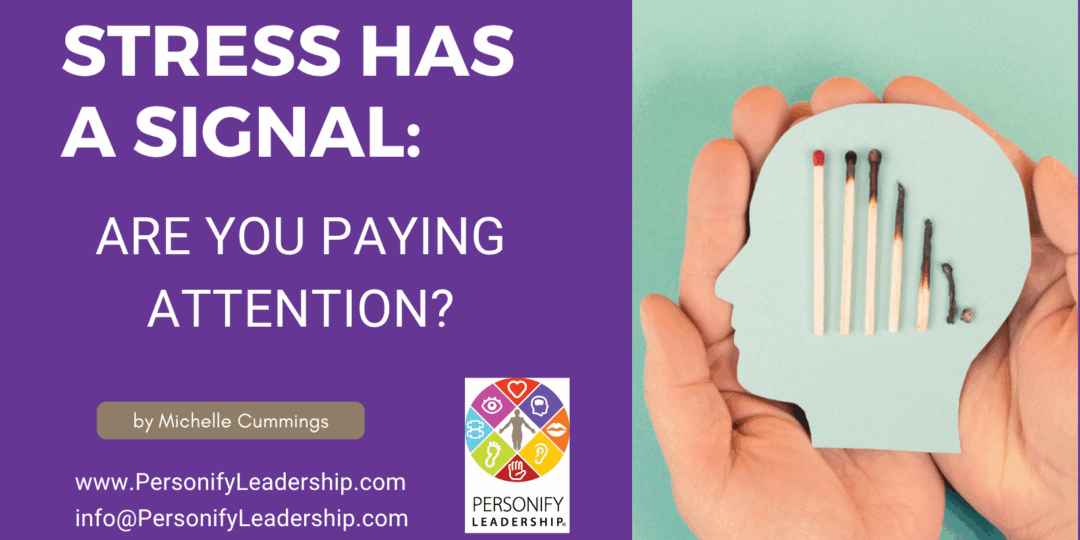
Stress Has a Signal. Are You Paying Attention?
Stress is a normal part of leadership. Deadlines, decisions, and pressure come with the role. But too often, leaders ignore the signs that stress is no longer helpful. It crosses the line from fueling performance to draining it. The key isn’t to eliminate stress, it’s to recognize when it shifts from a challenge to a threat.
Your body knows before your brain does. Maybe your sleep gets shallow. Your patience runs short. Your heart races over small things. These are not weaknesses. They’re signals. Physical signs like headaches, fatigue, or chest tightness often show up first. Then mental and emotional cues follow: irritability, forgetfulness, withdrawal, or decision fatigue.
The problem is, many leaders push past these signs. They power through meetings. They quiet the noise with caffeine, overwork, or avoidance. The longer the signs are ignored, the more intense they become. Eventually, performance drops, relationships suffer, and burnout begins to take hold.
Knowing your personal stress signals is the first step to managing them. Everyone’s signs are different. Some get more anxious. Others get quieter. The goal is to know your own patterns well enough to intervene early. That might mean stepping away for a moment, setting firmer boundaries, or asking for help before things spiral.
The leaders who manage stress well don’t avoid pressure. They learn to read the dashboard. They check in with themselves regularly and take action based on what they see. That self-awareness helps them stay centered and lead from a grounded place, even when things get intense.
Stress will always be part of the job. But it doesn’t have to control you. When you know the signs and respond with intention, you protect your energy, your team, and your ability to lead with clarity.
Our Core Program helps leaders build this awareness. It offers tools to recognize stress in real time, manage it effectively, and return to a more balanced state before it impacts performance.
0 528

Leadership Personifed: An Interview with Sidney Blakemore of Canal Barge CompanyLeading with Heart: When Serving Others Comes with a Cost



Recent Comments