How recognizing and valuing diverse perspectives strengthens trust, collaboration, and performance
At its core, leadership is about connection, and connection begins with understanding. In today’s diverse and global workplace, leaders who can recognize and appreciate different perspectives, cultures, and experiences are better equipped to build trust, foster collaboration, and make stronger, more inclusive decisions. This isn’t just a matter of awareness; it’s a matter of skill, empathy, and intention.
Research from Harvard Business Review and Deloitte consistently shows that teams led by inclusive leaders outperform their peers in innovation, problem-solving, and engagement. The reason is simple: when people feel seen and valued for their unique experiences, they bring their full selves to work. They contribute more ideas, take greater ownership, and engage more deeply with their teams. Inclusion fuels performance because it makes people feel they belong.
(more…)When you think about the most innovative teams in the world – those that generate fresh ideas, solve complex problems, and pivot quickly in the face of challenges – there’s a common thread running through them: psychological safety. Harvard researcher Amy Edmondson defines psychological safety as the belief that you can speak up with questions, concerns, or mistakes without fear of punishment or humiliation. It’s not about being nice; it’s about creating the freedom to contribute without fear.
In workplaces where psychological safety is strong, employees are more likely to take risks, share bold ideas, and collaborate openly. In fact, Google’s landmark “Project Aristotle” study found that psychological safety was the number one predictor of team success. Without it, even the most talented individuals hold back, fearing judgment or negative consequences. The result? Innovation stalls, trust erodes, and organizations miss opportunities to thrive.
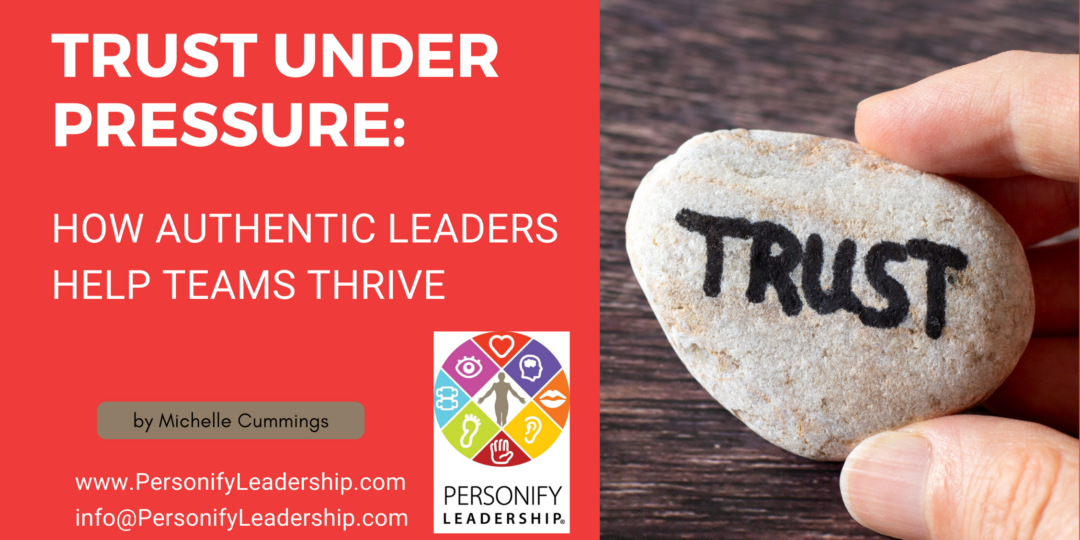
(more…)Trust is the foundation of leadership, but it’s tested most when pressure is high. In the Heart of a Leader module from the Personify Leadership Core Program, leaders are taught to lead with clear intention: to act in the best interest of others and stay aligned with their values. Authenticity is not just about being “real,” it’s about showing up in a way that reflects who you are and what you stand for, even in difficult moments.
When stress rises and uncertainty creeps in, teams begin to look to their leader for cues. This is when trust is either reinforced or quietly eroded. The Heart Module challenges leaders to ask, “What signals am I sending?” through tone, posture, presence, and action. If those signals match a leader’s stated intention, it builds stability and confidence. If they don’t, even small gaps in behavior can shake a team’s sense of safety.
(more…)

×
Tag: Trust


© 2012-2025 Personify Leadership. All Rights Reserved.
Recent Comments